

Creative Fatigue, anyone?
The silent battle no one really talks about. Plus...pretty pictures!

I don’t know about all of you but I started the new year off tired.
If one makes comics long enough, well, first of all, that person is probably crazy (looks in mirror).
You eventually reach a moment where you stare at a blank page or computer screen and think, “I have done this exact thing infinity times and somehow it has not gotten easier.” This is usually closely followed by the thought, “no one cares if I keep going anyway.”
That’s when, if one is self aware enough (I’m not … usually), they may realize they’re suffering from the kryptonite of all creative types: CREATIVE FATIGUE.
Creative fatigue shows up—not with a dramatic, smash-the-door-down entrance but as more of a dull, persistent resistance. Your hand knows how to draw the panel. Your brain knows how and what to write. Your heart, however, has stepped outside for a smoke and hasn’t come back yet.
Comic book creation is uniquely exhausting because the job asks you to be several different people at once. You’re the writer, inventing worlds and dialogue. You’re the penciler, translating ideas into storytelling, anatomy and perspective. You’re the inker, committing to decisions with no eraser safety net. You’re the letterer, quietly responsible for whether the whole thing reads smoothly or looks like a ransom note. You’re the colorist, trying to save the page with no time at all when the ball was dropped along the way. At every stage, you’re making hundreds of tiny choices, all of which feel important, and most of which no one will ever consciously notice.
Early on, adrenaline covers a lot of ground. You’re fueled by the idea that this project might be the one. The one that gets noticed; gets traction. You imagine readers discovering this thing you’ve been working your ass off to create and feeling exactly what you felt while making it.
That optimism is real, and it’s useful—but it has a shelf life.
Over time, the math becomes harder to ignore. The orders come in low. You realize how crowded the field is. You see how many good books disappear quietly. You start to understand that quality and hard work don’t necessarily equal success.
That’s when the fatigue deepens. When the idea of quitting begins to whisper in the back of the mind.
The desire to quit rarely arrives as a clean decision. For me, it shows up as avoidance. I check my email compulsively or tinker endlessly with page one instead of starting page two. A google search, a walk, a snack … a million forms of procrastination. Anything but the next panel. The work hasn’t become impossible—you’ve just grown tired of carrying the weight alone.
And yet, many of us keep going.
Part of that is love. Not the loud, infatuated love of early projects, but a quieter attachment to the language of comics itself. The way a page turn acts like a cliffhanger. The satisfaction of spotting blacks correctly to guide the viewer’s eye. The pleasure of a perfect line of dialogue. Even on bad days, there’s something comforting about the ritual: the page, the panels, the slow construction of a moment that you dream will resonate with the reader.
The other part is stubbornness. Creative stubbornness is refusing to let exhaustion have the final say. It’s continuing not because you’re confident of success, but because this is how you’ve learned to think. Comics are how you process the world. Stopping would feel less like rest and more like …cheating on oneself.
One of the most effective ways to survive comic-related burnout is deceptively simple: stop doing the part that’s draining you, and do a different part instead. When the writing feels impossible, letter a few finished pages. When penciling feels like wrestling wet cement, switch to inking and let muscle memory take over. When inking feels terrifying, do layouts. When everything feels heavy, organize files, prep pages, clean up dialogue. You’re still working—but you’re working sideways.
This isn’t avoidance; it’s rotation. Comics are modular by nature. Each stage engages a different mindset. Writing is expansive and vulnerable. Inking is decisive and physical. Lettering is technical and quietly creative. Moving between them gives your brain a chance to rest without fully disengaging. The project stays alive, even when your enthusiasm needs a breather.
There’s also a psychological relief in completing small, concrete tasks when the big picture feels overwhelming. Finishing inks on a page—even if the series feels doomed—still feels like a win. It reminds you that the work exists, that progress is measurable, that you are capable of finishing things even when belief is in short supply.
As optimism about commercial success fades, something else often takes its place: clarity. You stop making comics for an imaginary future audience and start making them for the person you are now. There’s a massive amount of freedom in not giving a fuck what anyone else might think. The work becomes less about breaking through and more about staying honest. None of it makes the creative fatigue disappear, but it makes it quieter, more manageable.
There’s humor in this phase, too, if you’re willing to laugh at yourself. The absurdity of pouring this much effort into a medium that requires folding, stapling, and convincing people to read left to right in tiny boxes. The private joke of knowing exactly how many hours of work went into a panel someone will look at once, for 4-6 seconds.
Soldiering on in comics rarely looks glamorous. It looks like working on page seventeen when no one is watching. It looks like switching from writing to inking because writing feels impossible that week. It looks like continuing even after the fantasy of making it has dimmed, because the act of making gives you meaning.
Creative fatigue doesn’t mean you’re finished. It means you’ve been at this long enough for the work to matter. And love—paired with a healthy amount of stubbornness—has a way of carrying you further than optimism ever could.
Every year for the last eight or nine, I’ve checked the creative furnace to see if there’s anything still burning down there and told myself, “OK, sucker. One more year.”
So here we go again. One more year. Second wind … activated!
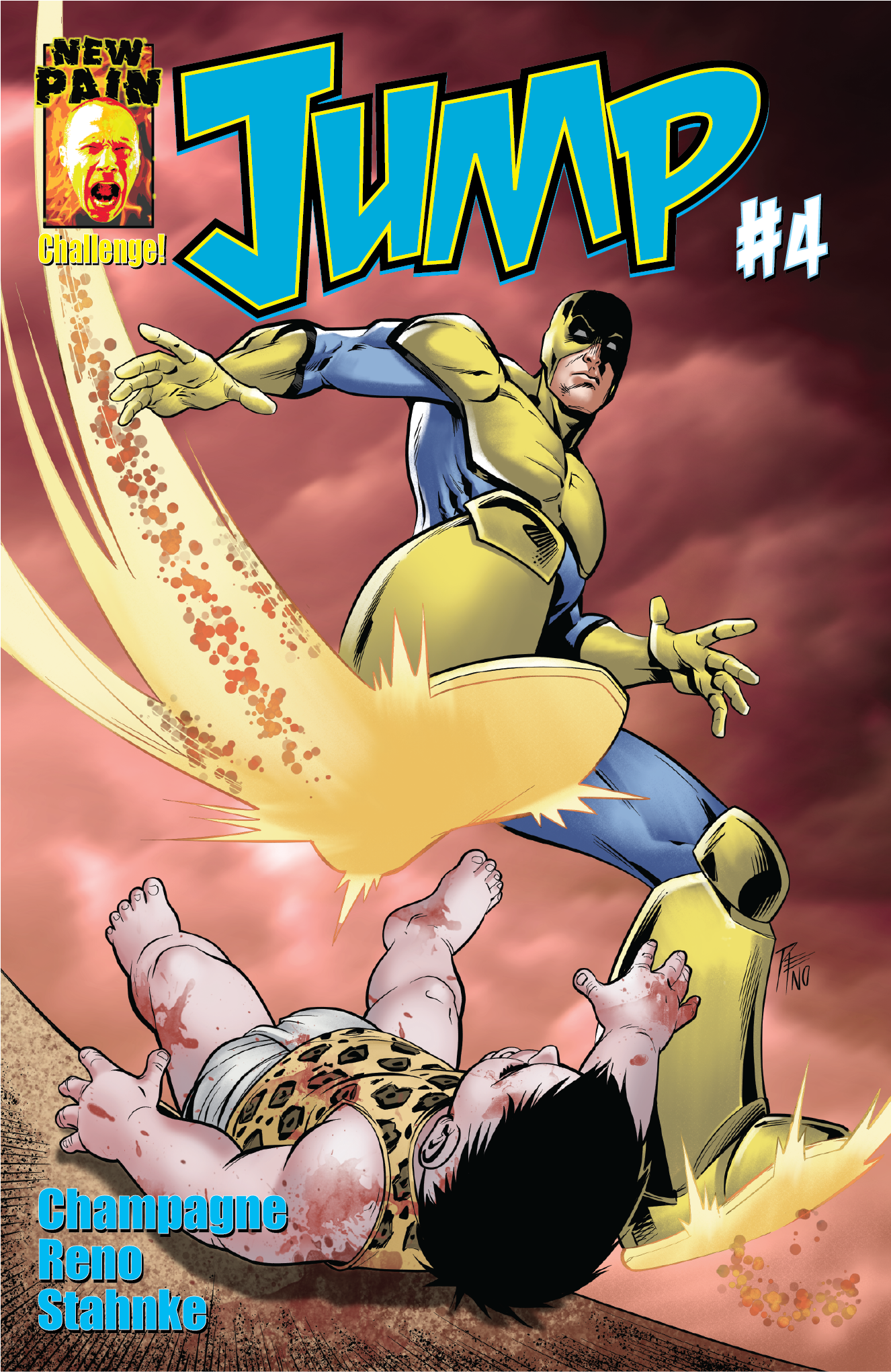
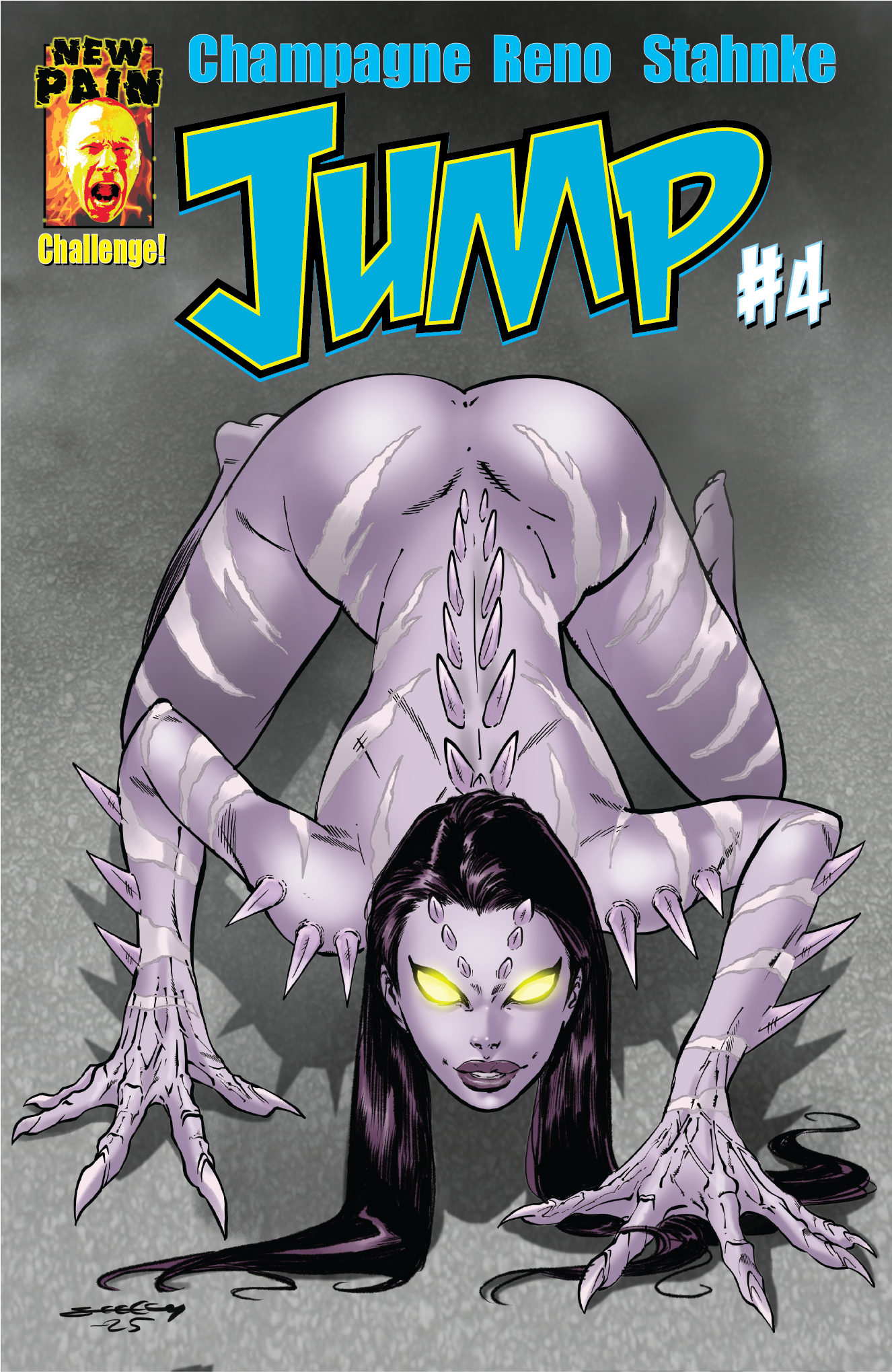
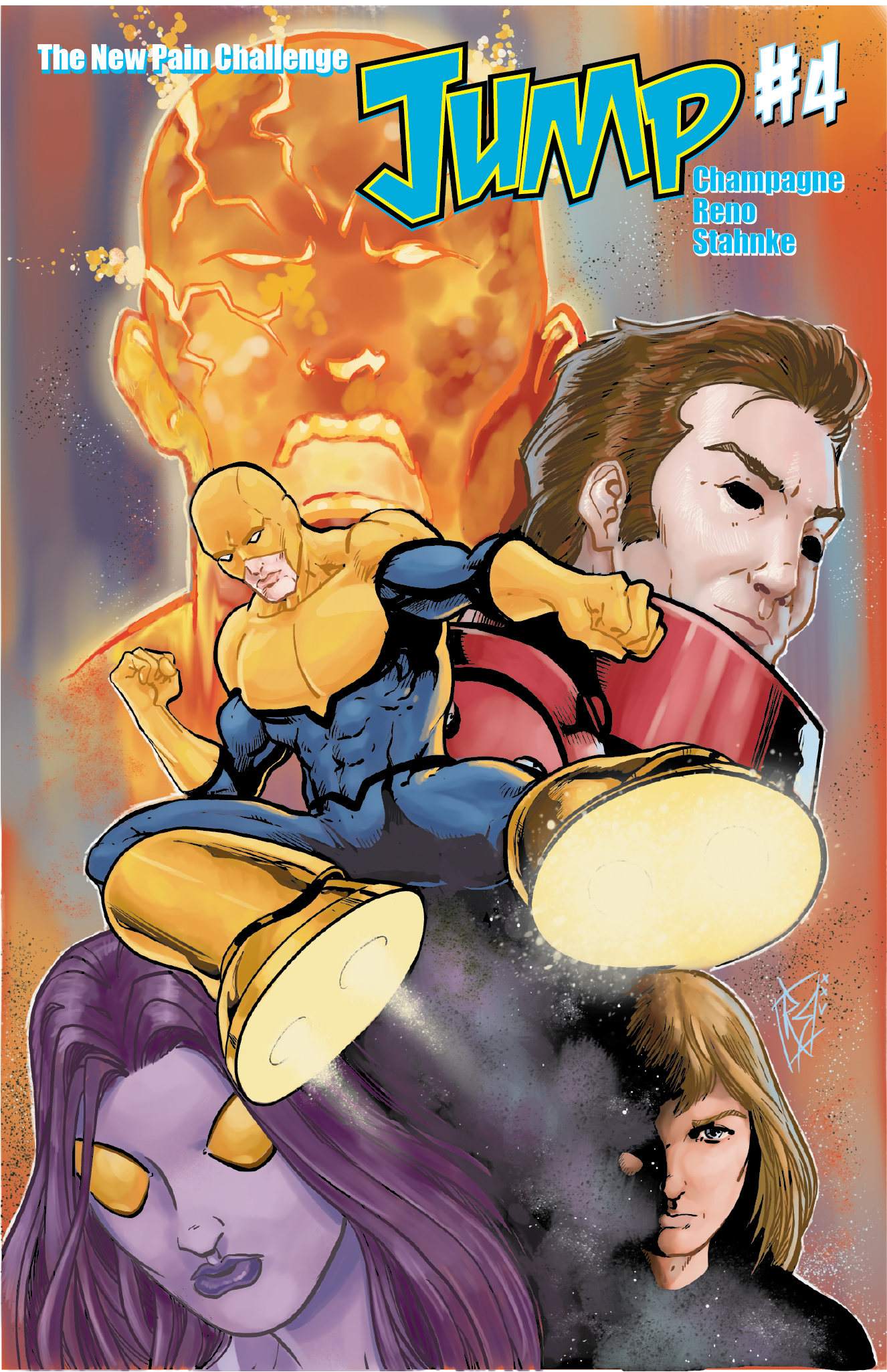
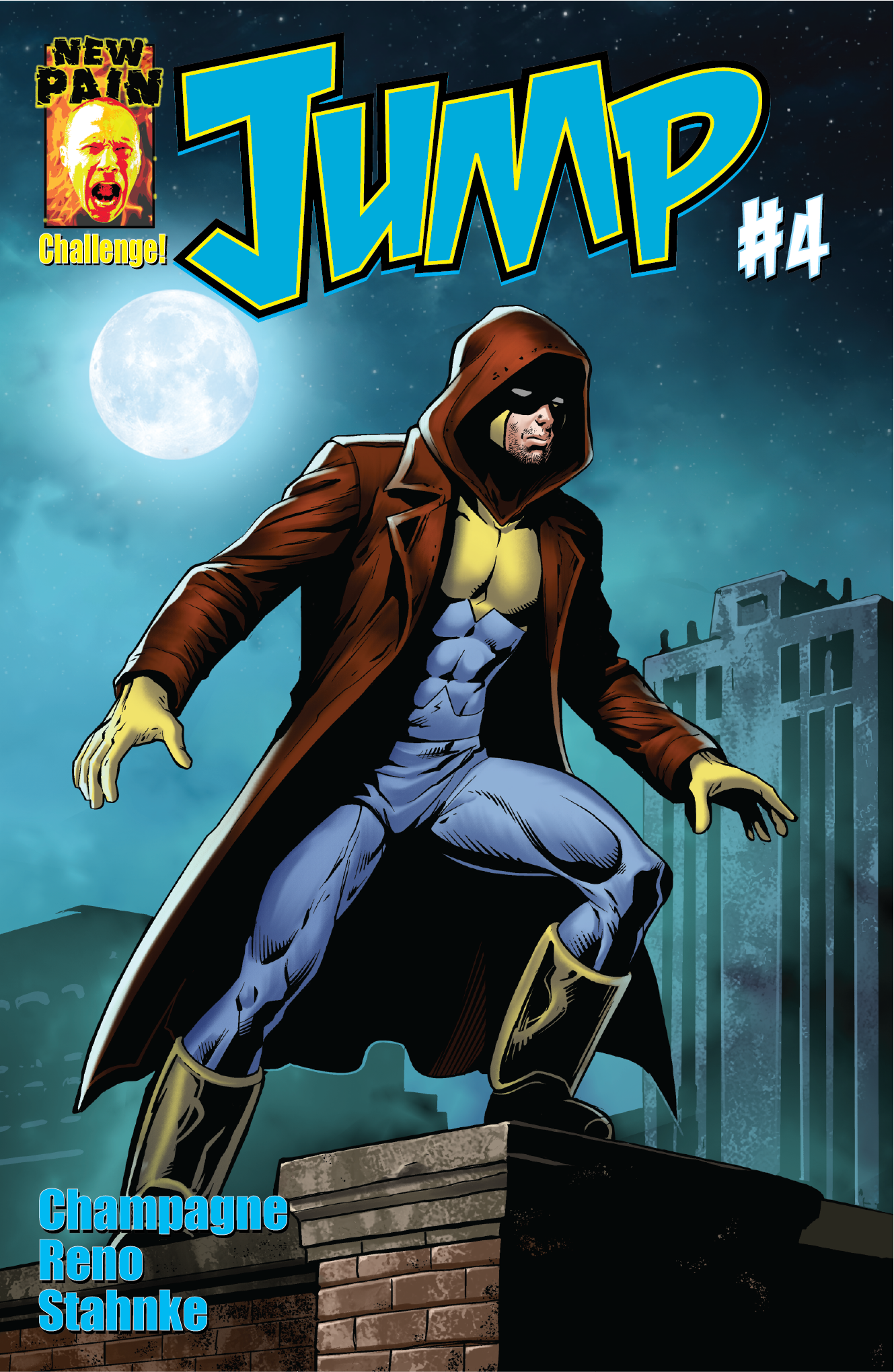
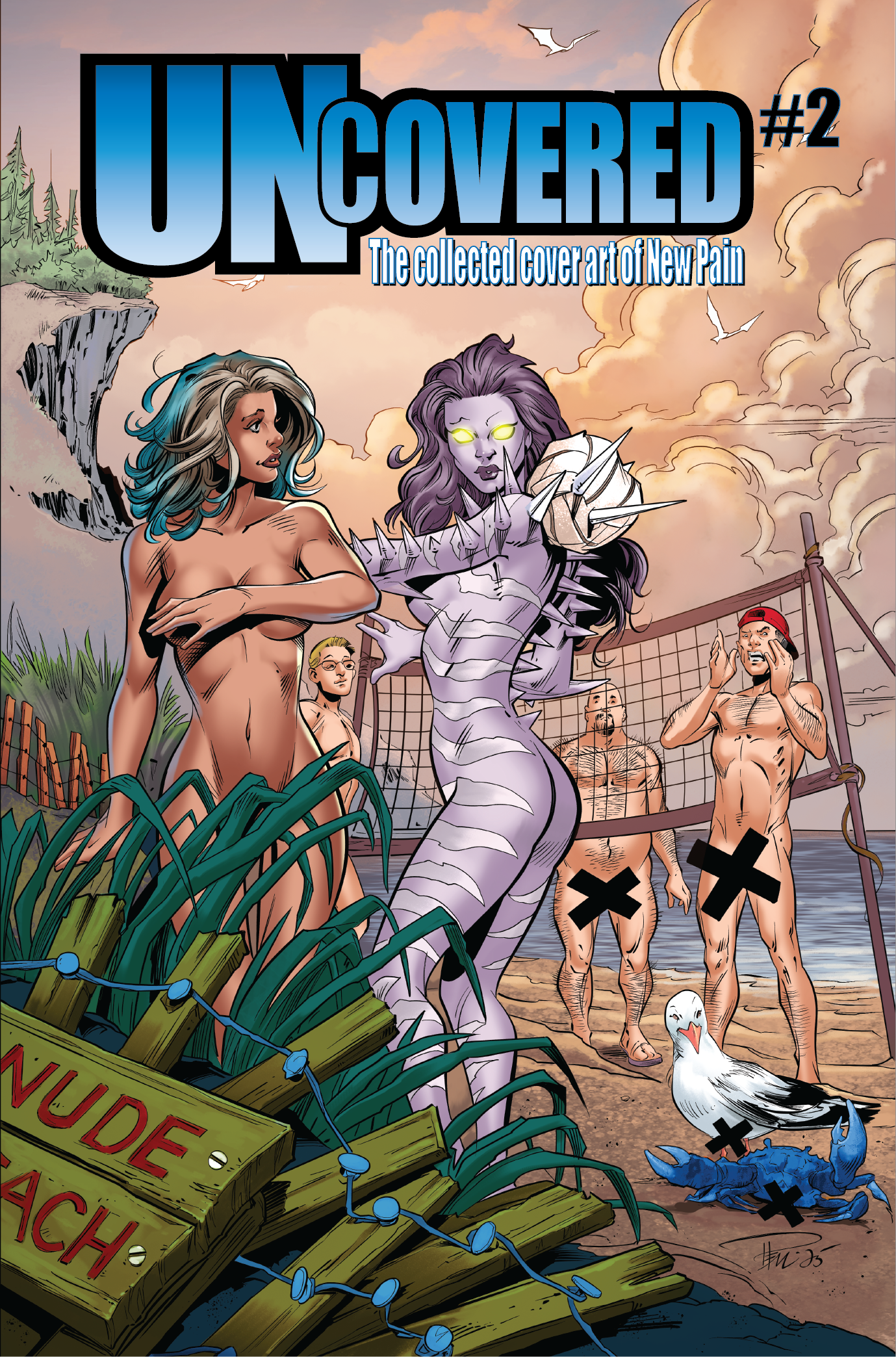
All the art seen in this post is from the New Pain Two-In-One campaign currently running on Kickstarter, featuring the final issue of JUMP and our second collection of cover art, UNCOVERED #2. I’d love for you to check out the end result of my struggle through the last few months of creative fatigue. The end result is always worth it.
Your best friend,
Keith Champagne
Yup. People will point the finger and say 'it's you're dream job! How can you not be happy? Just enjoy it, you're killing it...' etc. Except all-of-the-above. Why and how we keep going is a mystery, but we do. Sometimes we simply MUST, is as simple as that. Survival demands it more than anything! Great post.
NAILED it. What you wrote is so much my life, too, I again wonder if we aren't twins separated art birth.
I'd add that it's easier to power through Creative Fatigue when you're working on a job with a hard deadline, usually for an actual comics company. The job has to be in the editor's hands by Monday, so that line of dialogue or that panel of what we'll laughably call a "crowd" will have to do. That said, I'm pretty happy with 95% of what I've done over the years. When I look at old work, I'm amazed it's better than I remember (and/or horrified it's better than what I'm doing NOW), but there are still those moments when I think "If only I'd had another day to work on this scene…" Even if I'd been up for days to make a deadline, and got the next job as I handed in the last one, that next issue was always a fresh start, and re-invigorated me.
Of course, that doesn't come into play when you're doing your own comics through, say, Kickstarter, with no set deadline and, while you'd like to believe people will be happy to read it when you're done, no one is actually pounding on your door for you to finish. So you CAN take another day to work on that scene… or put it off until you're more in the mood to work on it.
In those cases I often Make Deals With Myself. Finish this script's first draft, then you can do roughs for that pin-up you'd really rather be doing. Finish inking this entire 5-page scene— including backgrounds, dammit!— and you can go see "28 Years Later: The Bone Temple" (choosing something totally at random). I have a very manipulative boss, but he gets the work out of me.
I also think Creative Fatigue is more frequent in Kickstarter-powered comics because you're not getting that monthly adrenaline hit when a new issue comes out. That's a great boost/morale refresher. But with Kickstarter, it could be six months between issues— or more (for me, at least)! Even conventions can be a double-edged sword. It's always great to see people who like your work, but the longer you haven't worked on something for the Big 2, the more you have to shift your mindset from "what I've done lately" to "what I'm building"— which, by its very nature, is less exciting and more methodical.
Still, I wouldn't trade this job for any other on the planet. Because nothing else comes close to the sense of satisfaction and accomplishment that creating comics gives me. Any Creative Fatigue that sets is always temporary, and the end results are always worth it.
Plus, I have no other marketable skills.